Journey Through My Books
Before taking you along on the journey through my books, I realize today, with several decades of hindsight, that the different stages of my path as an author unfolded naturally, without apparent effort, as if they were following an invisible thread that had been there all along — almost as if I had not drawn it myself.
Experiences related to death — near-death experiences (NDEs), after-death communications (ADCs), and end-of-life experiences (ELE) — offer material for reflection over a lifetime, and even beyond. At least, that has certainly been, and remains, the case for me.
In this reflection, I will focus exclusively on my books, without addressing my contributions to collective works or our papers in scientific journals .
1. On the Other Side of Life
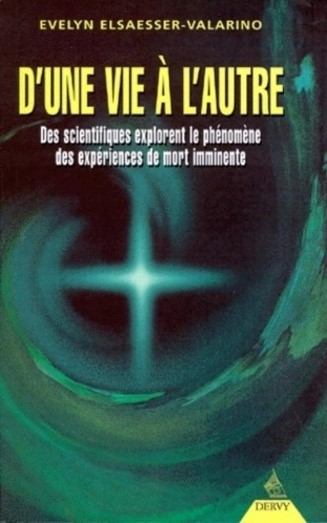
It all began when I discovered Near-Death Experiences (NDEs).
My first encounter with NDEs took place in the 1980s and proved decisive for both my personal convictions and my professional activities. Like millions of readers around the world, I discovered NDEs through Life After Life by Raymond Moody. From the very first pages, I realized that these testimonies seemed to answer many of my existential questions—while at the same time raising just as many new ones.
Near-death experiences are events during which individuals report perceiving a reality beyond ordinary consciousness, offering vivid impressions of what happens at the threshold of death and perhaps what may lie beyond. The accounts of those who undergo these experiences—known as experiencers—are compelling, often surprising, and yet remarkably consistent despite their diversity. These testimonies made me realize that taking them at face value would not do justice to their full significance. The years that followed showed me that the deeper one explores NDEs, the more layers of complexity and meaning they reveal.
In the 1980s, there were a few collections of testimonies and some scientific studies on NDEs, but no work offered a truly interdisciplinary perspective: what would a psychologist, a quantum physicist, a philosopher, or a biologist make of these experiences? Since I couldn't find the book I was looking for, I decided to write it myself.
As I considered how best to proceed, I sent an email to Kenneth Ring, one of the leading researchers in the field of near-death experiences at the time. I never imagined he would reply—but he did, the very same day. He said, "If you want to interview me, come and see me in Connecticut." It was as simple as that.
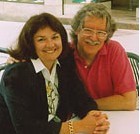
Ken and Evelyn
Kenneth Ring, Professor Emeritus of Psychology at the University of Connecticut, USA, is one of the foremost pioneers of modern academic research on near-death experiences.
To better understand this phenomenon, he spent countless hours meeting with experiencers—some even stayed in his home for several days or weeks. He jokingly nicknamed his house the "Death Hotel," a characteristic example of Ken's warm sense of humor.
This deep understanding enabled him to conduct numerous scientific studies exploring every aspect of NDEs. He not only published his findings in scholarly journals but also shared them widely with the general public through lectures, media appearances, and television programs.
Thanks to his tireless work, and that of his colleagues, NDEs have gained significant recognition among both the scientific community and the general public. While Raymond Moody introduced NDEs to a wide audience through Life After Life, Ken approached the subject from a rigorous scientific perspective, helping to establish its credibility among researchers while making it accessible to the public.
Ken is also co-founder and former president of the International Association for Near-Death Studies (IANDS) and founding editor of the Journal of Near-Death Studies.
Meeting Ken proved to be a turning point in many ways. He generously welcomed me into his home near the University of Connecticut, where he taught, and we spent an entire sunny day recording what he would later describe, with a smile, as the longest interview of his academic career.
Those hours allowed us to explore the full breadth of his research, capture his personal reflections, and uncover his deepest convictions. The interview was later published in On the Other Side of Life. That summer day also marked the beginning of a lasting friendship that has endured despite time and distance, as well as a rewarding collaboration that eventually led us to co-author Lessons from the Light (see below).
Our friendship continues to this day. Ken is now over ninety years old, and although we can no longer meet in person, modern communication tools allow us to remain closely connected.
Read Ken's blog about our friendship and collaboration: [PDF]
About the book
On the Other Side of Life is an in-depth exploration of the phenomenon of near-death experiences (NDEs), combining first-hand testimonies from experiencers with interviews with scientists, philosophers, psychologists, and researchers from a variety of disciplines. The book begins with a detailed examination of what NDEs are, illustrated through personal testimonies, before expanding into interdisciplinary dialogues that explore the nature, interpretation, and implications of NDEs from psychological, scientific, and spiritual perspectives. Through these testimonies and expert discussions, On the Other Side of Life offers a balanced, thoughtful, and comprehensive examination of NDEs, encompassing both personal experiences and broader theoretical reflections.
On the Other Side of Life has been published in six languages, including Chinese.
2. Talking with Angel about Illness, Death and Survival
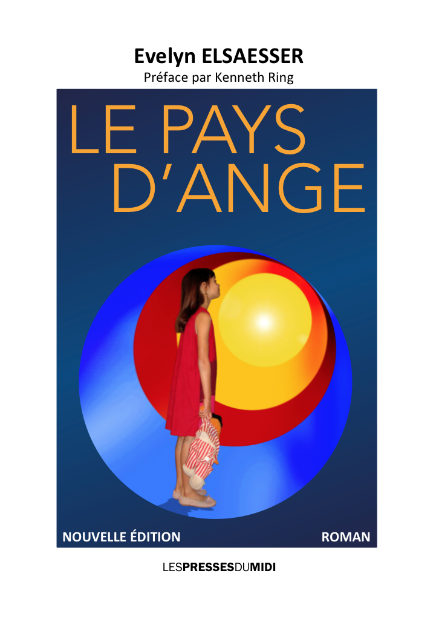
By this stage in my literary journey, I had already written, apart from On the Other Side of Life, several scientific articles and contributed to collective works. Yet their audience remained largely confined to the academic sphere, and I felt that something was missing — a way to reach beyond that circle.
How could one speak about near-death experiences, or more broadly about death itself, and about the delicate, almost elusive task of preparing for the final passage that awaits us all? I came to realize that writing a novel — or, more modestly, a simple story — could offer a solution: a space where questions could breathe, where imagination would have the freedom to explore the unknown, and where readers could encounter these mysteries not as distant observers, but as companions on the same journey.
This book had lived in my heart for a long time, until the day I brought it to life on paper. I wrote it with the hope of making existing knowledge about experiences related to death both accessible and meaningful — not only for those facing a major life crisis, but for anyone wishing to reflect on death and what might follow. At the heart of the book lies the detailed account of a near-death experience (NDE).
About the book
Talking with Angel about Illness, Death, and Survival tells the moving story of a young girl battling leukemia. As she becomes aware that her life may be coming to an end, she finds comfort and hope through her nightly conversations with her beloved doll, Angel. Through these gentle dialogues, she learns to adopt a new perspective on death, opening herself to the possibility that consciousness may survive the body. Her fear of death gradually fades, carried by the spiritual teachings she receives, the account of an NDE shared by a young companion, and a vision of her deceased grandmother — moments that illuminate a path from fear to understanding, from uncertainty to peace.
This book tells a delicate yet powerful story about the closeness of life and death, about pain and comfort, about fear and trust. It opens a space for a spiritual perspective in which illness can be understood not only as a loss, but also as a path toward inner growth. A touching work for readers of all ages — whether they are healthy, facing illness, or grieving — and seeking a new understanding of the survival of consciousness beyond physical death. Written with sensitivity and clarity, the narrative offers comfort, hope, and a lasting sense of serenity in the face of life’s greatest challenges.
Excerpt from the Preface by Kenneth Ring
“On the surface, Talking with Angel tells the story of a young girl, narrated in the first person, who is suffering from a serious illness. From the very first lines, we, the readers, are immersed in her mind and captivated by the drama she is experiencing. We follow the flow of her thoughts and emotions as her illness progresses. It is as if we become her diary: she writes, she confides her deepest thoughts to us, and she draws us into the heart of her experience. She allows us to fully enter into her illness and all its challenges, and we thus share her journey, feeling intimately connected to her — and to the people around her.
Gradually, her anxiety becomes our own — but so too do the knowledge and understanding she gains throughout her struggle to accept what has happened to her. These lessons, these moments of awareness that come to her, appear to us as the very essence of the book. This is truly what the story is about and what it seeks to convey. […]
At the beginning of the story, she appears to be like any other young girl. But as her illness progresses, she evolves as well — in her knowledge, in the depth of her personality, and ultimately in the remarkable spiritual wisdom she acquires while confronting the possibility of “the end of everything.” In short, this young girl undergoes an accelerated process of personal and spiritual maturation, so much so that by the end of the book she reminds us of someone like Anne Frank; we then realize that we have had the privilege of reading the diary of another young girl whom we will not soon forget. […]
This is essentially a book of wisdom teachings — more precisely, a work that conveys teachings about death and the possibility that something profound transcends death and may, in return, illuminate and transform the living. Like Plato’s dialogues, Talking with Angel ultimately constitutes a stimulating philosophical exploration for the mind, addressing one of humanity’s great eternal questions, but from an entirely new contemporary perspective.”
Talking with Angel about Illness, Death, and Survival has been published in ten languages. Interestingly, the Turkish edition has been the most successful, with fourteen editions published to date.
3. Lessons from the Light
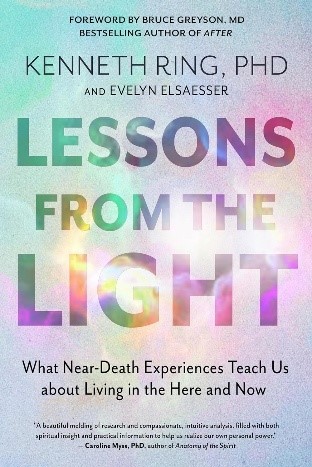
Following my trip to Connecticut to record an in-depth interview, later published in On the Other Side of Life, Ken Ring and I remained in close contact. What began as a collaboration centered on that extensive conversation gradually evolved into an ongoing professional relationship. Over time, our exchanges became more substantial, leading to collaborations on various projects rooted in the shared interests and intellectual framework that had initially brought us together.
One of the outcomes of this collaboration was Lessons from the Light, for which Ken Ring kindly credited me as co-author. It is important for me to clarify, however, that this is fundamentally Ken's book—his ideas, his research, and his writing. Although my contribution was meaningful within the context of our collaboration, I do not feel it reached the level of true co-authorship. Ken, nevertheless, was generous enough to acknowledge me as such.
“No other researcher has been able to transmit to the rest of us the true meaning and impact of near-death phenomena for the planet.”
— Bruce Greyson, MD, bestselling author of After
“A major contribution that offers a wealth of case material together with balanced and insightful commentary.”
— Raymond A. Moody, PhD, bestselling author of Life After Life
About the book
While presenting many remarkable accounts of near-death experiences (NDEs), Lessons from the Light goes far beyond being simply an inspiring collection of testimonies. Written in clear and accessible language, it draws practical lessons about living and dying from the study of these experiences. Lessons from the Light is intended for readers seeking knowledge and wisdom to enrich their own lives by embracing the insights gained from what many consider to be the ultimate spiritual experience.
Although Lessons from the Light recounts many moving stories of NDEs, it is far more than a collection of inspiring testimonies. The book also provides practical guidance and concrete exercises that help readers apply these insights in their own lives, develop greater self-awareness, compassion, and kindness toward themselves and others, and prepare more peacefully for death, the dying process, and bereavement. Readers can readily integrate these lessons from the Light into their daily lives, fostering profound personal and spiritual transformation.
Lessons from the Light has been published in nine languages, including Chinese.
4. French translation of Hello from Heaven by Bill and Judy Guggenheim
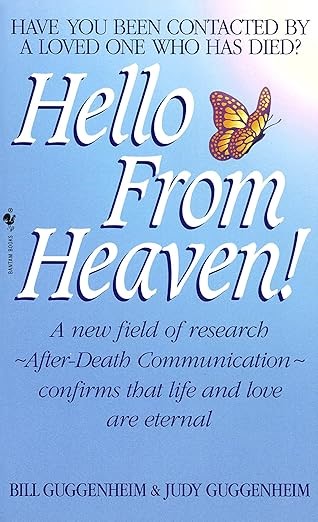
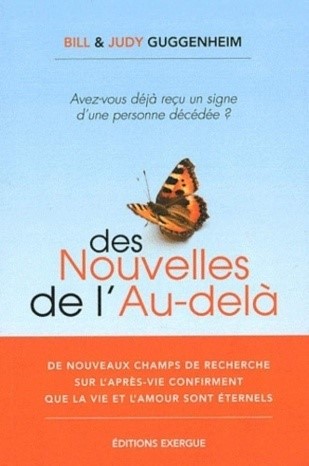
I am departing from my decision to present only my own books in this section, as my French translation of Hello from Heaven marked the starting point of the work that would occupy me for the decades that followed.
About the book
Hello from Heaven is a groundbreaking study of what the authors call After-Death Communications (ADCs)—spontaneous and direct contact with deceased loved ones. Over seven years of research, Bill and Judy Guggenheim interviewed more than 2,000 people throughout the United States and Canada and collected over 3,300 first-hand accounts of these experiences, 353 of which are presented in the book as complete personal narratives.
The book explores these experiences as evidence of the continuity of life and love beyond physical death, offering comfort, hope, and spiritual insight to readers coping with the loss of a loved one or with their own fears of death. Upon its publication in 1996, Hello from Heaven helped establish ADCs as a recognized field of research, was featured on American television and radio programs, appeared on U.S. bestseller lists, and reached a wide audience interested in spiritual experiences, grief support, and the possibility of life after death.
As has happened so often throughout my Journey Through My Books, translating Hello from Heaven into French proved to be a decisive step in the continuation of my work. I had known Bill Guggenheim for years through email correspondence before finally meeting him in person at a conference of the International Association for Near-Death Studies (IANDS) in Houston, Texas. During our conversations, he asked whether I would be willing to translate Hello from Heaven—already published in several languages—into French and find a publisher in France.
Against all logic, I immediately said yes, as though I had no idea what it really meant to translate a 398-page book without any of the translation tools we have today. Looking back, I am very grateful that I accepted his proposal.
The translation naturally required an enormous amount of time, but it also opened an entirely new world to me—the world of spontaneous contacts with the deceased. By translating all 353 ADC accounts, rereading them, and checking my work over and over again, I eventually came to know almost every one of them by heart. That was when I realized this would become my new field of research. My decision was made.
Once the translation was completed, I wrote an introduction and quickly found a French publisher (Éditions Exergue), which published the book under the title Des Nouvelles de l'Au-delà.
5. Quand les défunts viennent à nous (not translated into English)
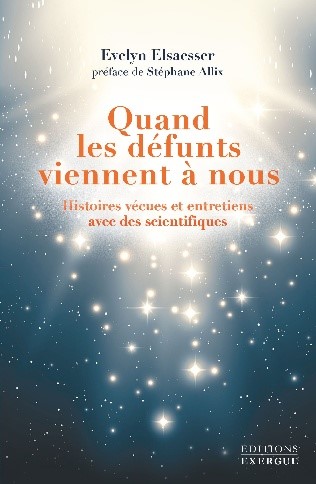
Translating Hello from Heaven into French sparked my interest in spontaneous and direct after-death communications (ADCs) that appear to be initiated by the deceased. What is the nature of these experiences? Who reports them, and under what circumstances do they occur? What do the deceased purportedly “say”? What is communicated, and with what intention? More broadly, how might we understand the meaning and phenomenological characteristics of such experiences? How do individuals respond when they undergo these experiences? Are they surprised, frightened, comforted, stunned, or intrigued by what appears to be an entirely inconceivable event? What impact do these experiences have on recipients—particularly with regard to their grieving process and their understanding of the possible survival of consciousness after physical death?
All these questions intrigued me. I decided to study this phenomenon in greater depth and to write a book about these experiences.
Having translated the 353 American and Canadian testimonies presented in Hello from Heaven, I already had a good understanding of the phenomenology of spontaneous after-death communications (ADCs). Yet, in order to write my own book, I wanted to collect first-hand testimonies from individuals in my own part of the world. To this end, I published an article entitled “VSCD: Hallucinations or Reality?” in Inexploré, the magazine of INREES, in 2013, in which I called for testimonies. An impressive number of accounts were sent to me, forming the basis of the book I was about to write.
About the book
Quand les défunts viennent à nous: histoires vécues et entretiens avec des scientifiques explores a little-known yet widespread phenomenon: spontaneous after-death communications (ADCs), in which a person may unexpectedly feel, see, hear, or perceive the presence of a departed loved one. Firmly rooted in real-life testimonies, the book examines these experiences through first-hand accounts, approaching them from a psychological perspective to understand their meaning and impact rather than to prove or disprove the existence of an afterlife.
Evelyn Elsaesser goes beyond collecting personal stories by conducting interviews with experts from multiple disciplines, shedding light on ADCs from diverse scientific and human perspectives. She also examines cross-cultural aspects, highlighting how these experiences are understood, interpreted, and integrated differently across societies. This multidimensional approach allows for an in-depth reflection on the nature and consequences of these experiences, particularly in relation to the grieving process. Elsaesser demonstrates that spontaneous contact with the deceased can be studied rigorously while still respecting its emotional and subjective dimensions, rather than being dismissed as mere hallucinations or superstitions.
Preface by Stéphane Allix
Evelyn Elsaesser is one of the world’s leading experts on experiences related to death, and more specifically those extensively described in this book.
As I began my investigation into these extraordinary subjects in the summer of 2003, the eminent American psychologist Kenneth Ring, whom I had just contacted, recommended that I reach out to Evelyn Elsaesser in Switzerland. Indeed, the two had recently published a book devoted to near-death experiences, and Kenneth Ring had nothing but praise for Evelyn. I called her and was instantly captivated by this researcher at heart, who combined great kindness, exceptional listening skills, and meticulous rigor.
A relationship of respect and friendship was immediately established between Evelyn and me. Therefore, when I founded INREES a few years later, Evelyn naturally became one of its pillars and an active member of our scientific committee. She played an essential role in the research we undertook to centralize the available clinical knowledge on near-death experiences, as well as all types of accounts involving contacts between the living and “deceased individuals.” Evelyn then devoted herself with remarkable dedication to writing three central chapters of the Clinical Handbook of Extraordinary Experiences, including the chapter dealing with spontaneous after-death communications (ADCs), a term that was coined on that occasion.
These experiences of alleged contact with the deceased are not anecdotal. They occur by the tens of thousands around us. Bereaved individuals who perceive, in various forms, a contact or even a communication from their departed loved one are deeply moved and comforted, but they may also feel unsettled because such experiences do not fit within the prevailing conception of reality. Quand les défunts viennent à nous offers keys to better understand these experiences and integrate them into the grieving process—through numerous ADC testimonies, the informed perspectives of interviewed scientists, and the author’s reflections.
Evelyn devotes a chapter to a particular type of ADC: end-of-life visions, in which people nearing death perceive deceased loved ones who have come “to accompany them into the other world,” instantly freeing them from their fear of death. These visions are reported by nurses, physicians, and healthcare professionals, who clearly distinguish them from known hallucinatory phenomena.
The originality and great merit of this book lies in placing ADCs within a broader context of other death-related experiences—including near-death experiences and communications from the deceased reported by mediums—and in comparing their modes of expression and the messages they convey.
Countless people have experienced these types of phenomena and yet do not dare to speak about them, not even with those close to them. This is undoubtedly one of the first benefits of this essential work: bringing these widespread and significant experiences out of the shadows and beyond denial. This is the extraordinary richness of Evelyn Elsaesser’s work of synthesis.
Quand les défunts viennent à nous is the result of a long-term undertaking and is undoubtedly the most thoroughly documented work available on the subject to date. This book, both rigorous and highly accessible, allows us to consider life after death as a rational hypothesis.
Quand les défunts viennent à nous has been published in four languages.
6. Spontaneous Contacts with the Deceased
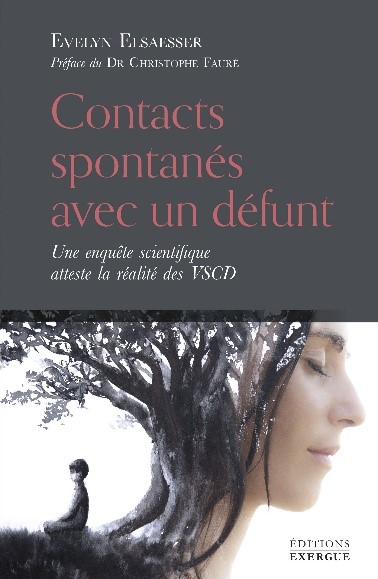
Quand les défunts viennent à nous quickly found its readership. Thanks to the call for testimonies I had included in the book, accounts came pouring in.
The messages from my correspondents often began in the same way:
“I have just finished your book and would like to share my ADC, which occurred some time ago [from a few months to several decades ago]. I have never spoken about it to anyone, for fear of not being believed or even being ridiculed.”
Others had shared their ADC only with a few close relatives or friends: some were listened to and believed, while others were told that they had probably been deeply affected by grief and had imagined the contact with their deceased loved one.
Many had never spoken about it again. “I have kept this experience preciously in my heart, like an intimate and cherished memory,” they wrote. For many, writing to me represented the very first time they had dared to put words to something so profound and meaningful: an encounter that had helped them heal, even though they had carried it alone for years.
Another striking and surprisingly frequent observation was that many of my correspondents did not know how to name their experience. For a long time, they believed they were the only people in the world to have experienced spontaneous contact with a deceased loved one. They felt profound relief upon discovering that this phenomenon not only had a name, but had also been experienced by many other people — giving them reassurance that they were not alone in what had seemed to them an intensely private and extraordinary encounter.
After reading all these correspondences, I decided that the time had come to undertake a large-scale scientific investigation into the phenomenology and impact of ADCs, with the aim of bringing visibility and credibility to this experience — so beautiful, so widespread, so comforting, and transformative for those who experience it. I submitted a project proposal to a foundation that prefers to remain anonymous. It placed its trust in me and awarded a generous grant to support the implementation of this research project. I assembled a team, and we launched our long-term international research project in February 2018, a project that is still ongoing today. For more information, see the “ADC Research Project” section.
From the second phase of the project onwards, we also benefited from financial support from the Bial Foundation and the Society for Psychical Research (SPR).
About the book
I published the results of our surveys in English, French, and Spanish, bringing together the responses of 1,004 participants as part of the largest international scientific study ever conducted on subjective experiences of contact with the deceased (ADCs). These results, extensively illustrated with first-hand testimonies, provide a vivid and nuanced insight into the circumstances, nature, and consequences of these spontaneous experiences — experienced by a large number of people, particularly those who are bereaved, and often described as both comforting and meaningful.
The conclusions of this research are presented in my book Spontaneous Contacts with the Deceased: A Scientific Investigation Confirms the Reality of ADCs, which demonstrates not only how these experiences manifest in people’s lives, but also the beneficial effect they have on the grieving process, allowing recipients to perceive the apparent desire of the deceased to continue expressing their love and support.
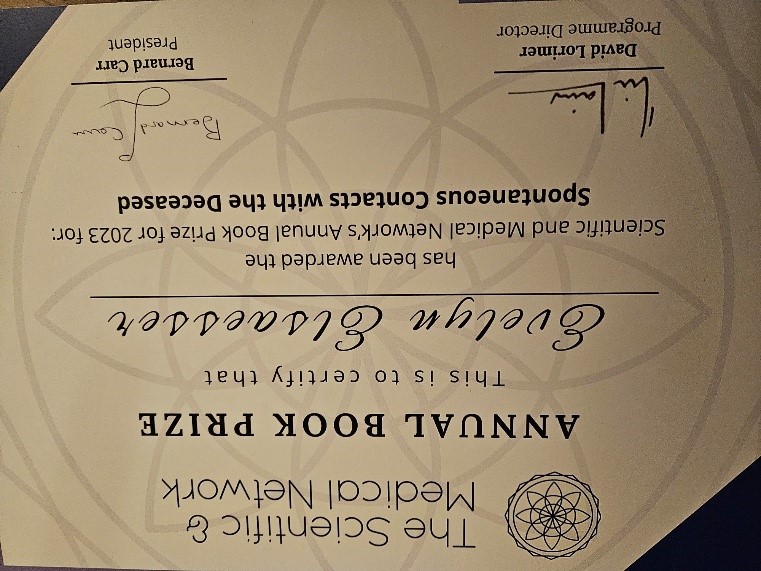
The book received the 2023 Scientific and Medical Network Book Prize.
Excerpt from the Preface by Christophe Fauré
At first, I did not believe it.
During my early years as a psychiatrist working in the field of palliative care, I accompanied bereaved people after the loss of a loved one. They shared their suffering, their pain, their anger, their guilt… This is how I walked alongside them on the painful path of grief. At that time, I saw it only as the unfolding of a process whose psychological dimension was the only one I initially perceived.
But, over the years, curious experiences began to appear in my patients’ accounts. They occurred with such consistency and recurrence that it became impossible for me not to take them seriously into consideration.
People spoke to me about “signs.” Signs interpreted by these individuals as manifestations of their deceased loved one, but about which they remained silent, sometimes for years, because they feared being considered “crazy” if they revealed them to those around them! Many of them, somewhat embarrassed to speak this way to a psychiatrist, would say to me: “Doctor, I am a very rational person, but…” and then came the story of that troubling “something” that had occurred after the death of their loved one. “Something” that I later learned to call “ADC.”
ADC: After-Death Communication.
After more than 25 years of accompanying bereaved individuals, I still ask this question today, in a more or less direct way: “Since the death of your loved one, do you feel that you have experienced any ‘signs’ or particular perceptions?” I cannot count the number of people who, relieved by my question, immediately hurry to tell me about one or more ADCs!
There is therefore a real subject here that deserves our full attention, given the considerable implications, and I am pleased that my own years of observation and listening in my practice find a powerful echo in the content of this book.
We must become aware of this: publishing such a book is not insignificant, and I wish to salute the integrity and genuine courage of these authors, researchers, and internationally recognized university professors who dare to put their professional credibility at stake in order to venture, as true pioneers, into the mysterious territory of ADCs.
Let there be no mistake: we are not here in the realm of belief; beliefs to which one would cling, in a desperate attempt to suppress the fear of death and the anguish of nothingness. No: the approach of these researchers is entirely different. It is based on listening, observation, collection, and analysis of data. It relies on a scientific methodology that observes and establishes facts. Thus, even though the subject of ADCs may seem to be the opposite, one could not be more Cartesian in this approach! The authors rely on tangible information, and this is what gives their work its relevance and intelligence. […]
This is the intelligence and subtlety of this book: it does not answer this question directly. Indeed, Spontaneous Contacts with the Deceased describes the phenomenon of ADCs based on testimonies. However, it does not venture into interpreting the collected data. It leaves the reader free to draw their own conclusions, while simply offering avenues for reflection: what meaning should be given to these experiences? What do they tell us about what lies beyond this life? Could they suggest a continuity of consciousness after death? Here we enter the spiritual dimension of ADCs, which is not the subject of this book. […]
Which direction? It is up to you to define it. It is up to you to form your own opinion based on your research and reliable readings on these different subjects that you choose to explore.
And this is precisely where Spontaneous Contacts with the Deceased can truly help you.
Whether it confirms your own feelings if you have personally experienced an ADC, whether you have not experienced an ADC even though you are grieving, or whether it stimulates your curiosity and invites you to investigate further and explore the meaning and implications of this phenomenon, you hold a valuable companion in your hands. It is capable of deeply nourishing your reflection.
Who knows where it will lead you?
I wish you a good and fruitful reading.
Dr. Christophe Fauré
Author of “Vivre le deuil au jour le jour” Editions Albin Michel
“Spontaneous Contacts with the Deceased” has been published in five languages.